Electro-mechanical (wireline), Dycam, and Swab Line cables are made with high strength steel wires that have been coated with an iron – zinc alloy called galvanizing. This galvanizing is applied to the bare steel wire at temperatures around 842 ˚ F (450 ˚ C) and help to protect the steel wires from corrosion and extend the useful life of the cable during operations in oil and gas wells.
While a wireline insulator’s temperature rating will cause a failure long before there are any problems with the galvanized steel wires, there are lower limits that can have an effect on operations of Dycam and Swab Lines that do not contain the electrical components of a wireline.
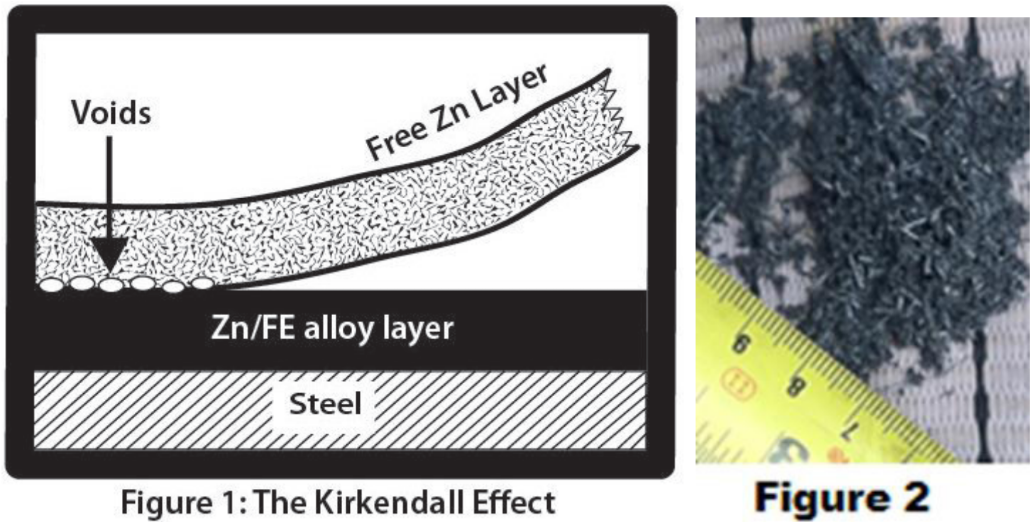
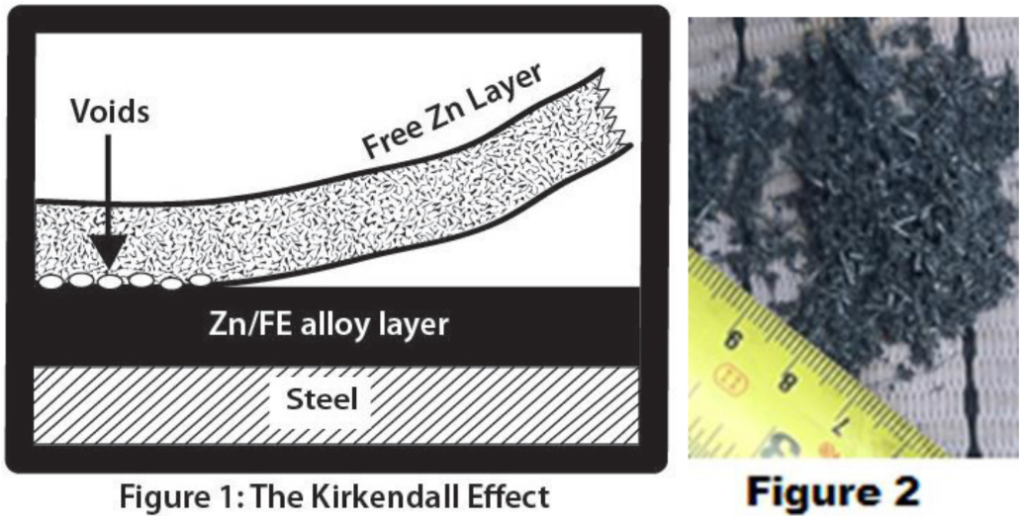
Exposure to elevated temperatures, like those experienced during geothermal operations, can induce a situation where the outer free zinc layer begins to separate and fall away from the underlying zinc-iron alloy layers. This phenomenon is called the Kirkendall Effect and can cause swelling of the steel and subsequent flaking off of the free zinc layer that will appear as shavings.
While the remaining zinc-iron alloy layers can still provide a high level of corrosion protection, extended exposure to high temperatures will accelerate peeling and can result in the zinc-iron alloy layers cracking and separating from the steel. The resulting swelling and shavings can also cause the clogging of pressure control equipment. This reaction of galvanized coating peeling in the presence of temperature depends on the length of exposure and the severity of the environment. While the galvanizing industry’s recommended service exposure for galvanized steel is less than 390 ˚ F (200˚ C) for long-term usage and 660 ˚ F (350 ˚ C) for short-term exposure (less than 2 hours at a time), during wireline operations, exposure to the highest temperature of a well is usually limited to a small portion of the cable, those at the deepest sections, and for relatively short periods of time. Therefore the potential for adverse reactions with the galvanizing during normal oil and gas operations is mitigated. Nevertheless, the above information should be taken into consideration when operating in environments that may require exposure to elevated temperatures for extended periods of time and any cable regularly exposed to increased temperatures should be inspected regularly to determine its useful working life.